Chavand
Fort Images
Explore Various Images of the Fort
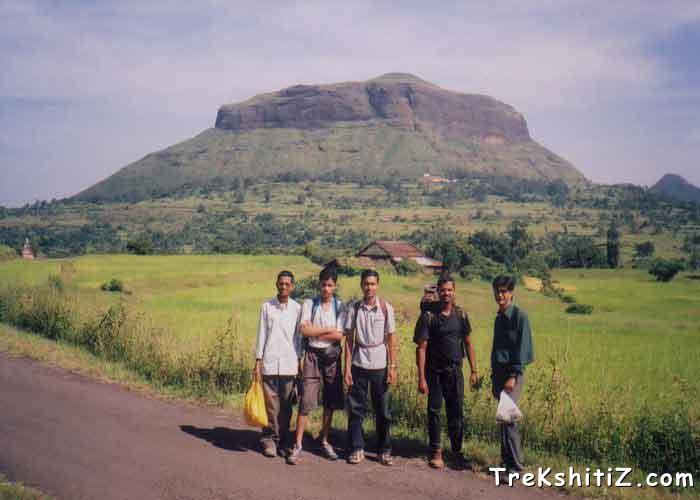
Chavand-From the way to Kukdeshwar temple
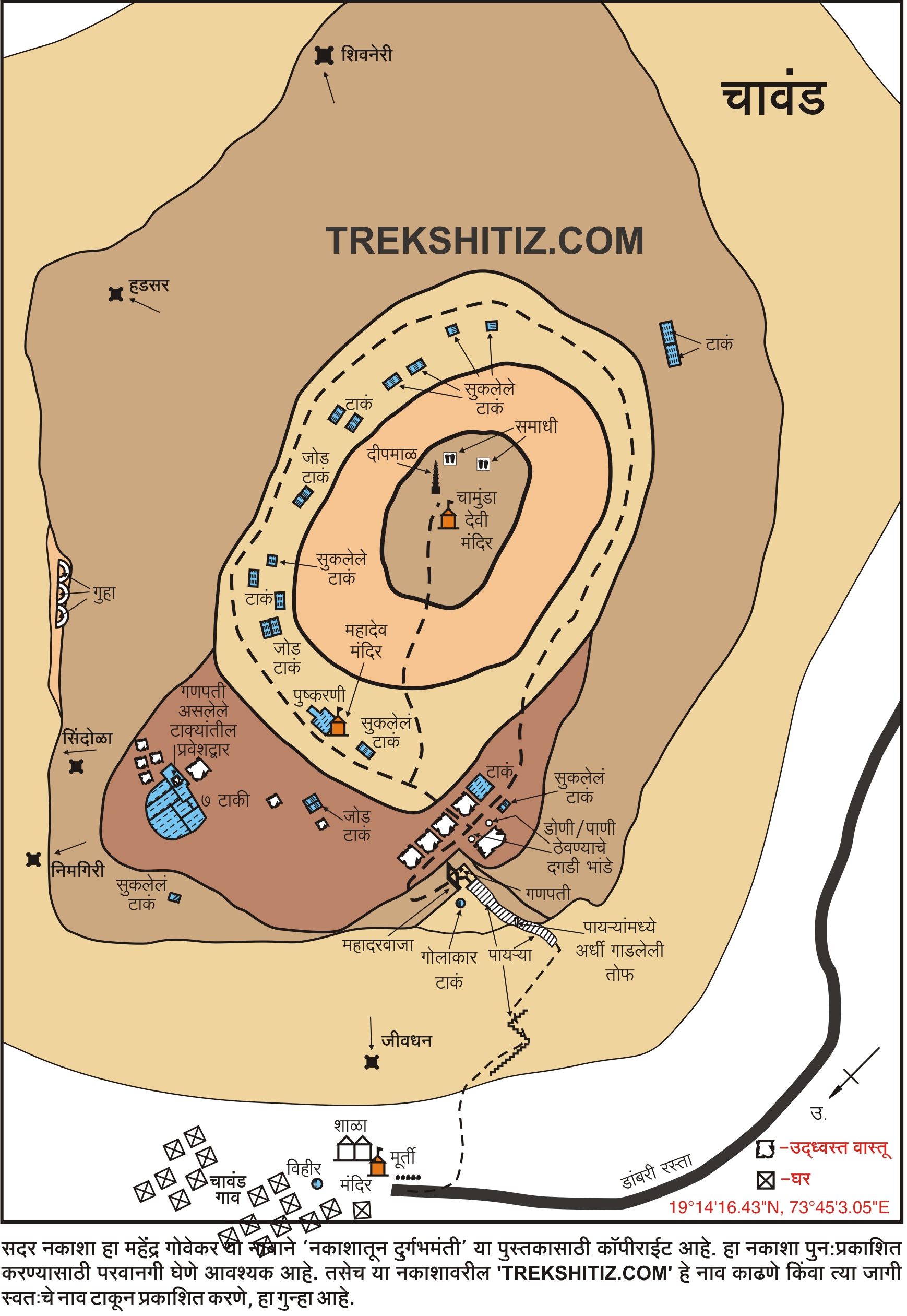
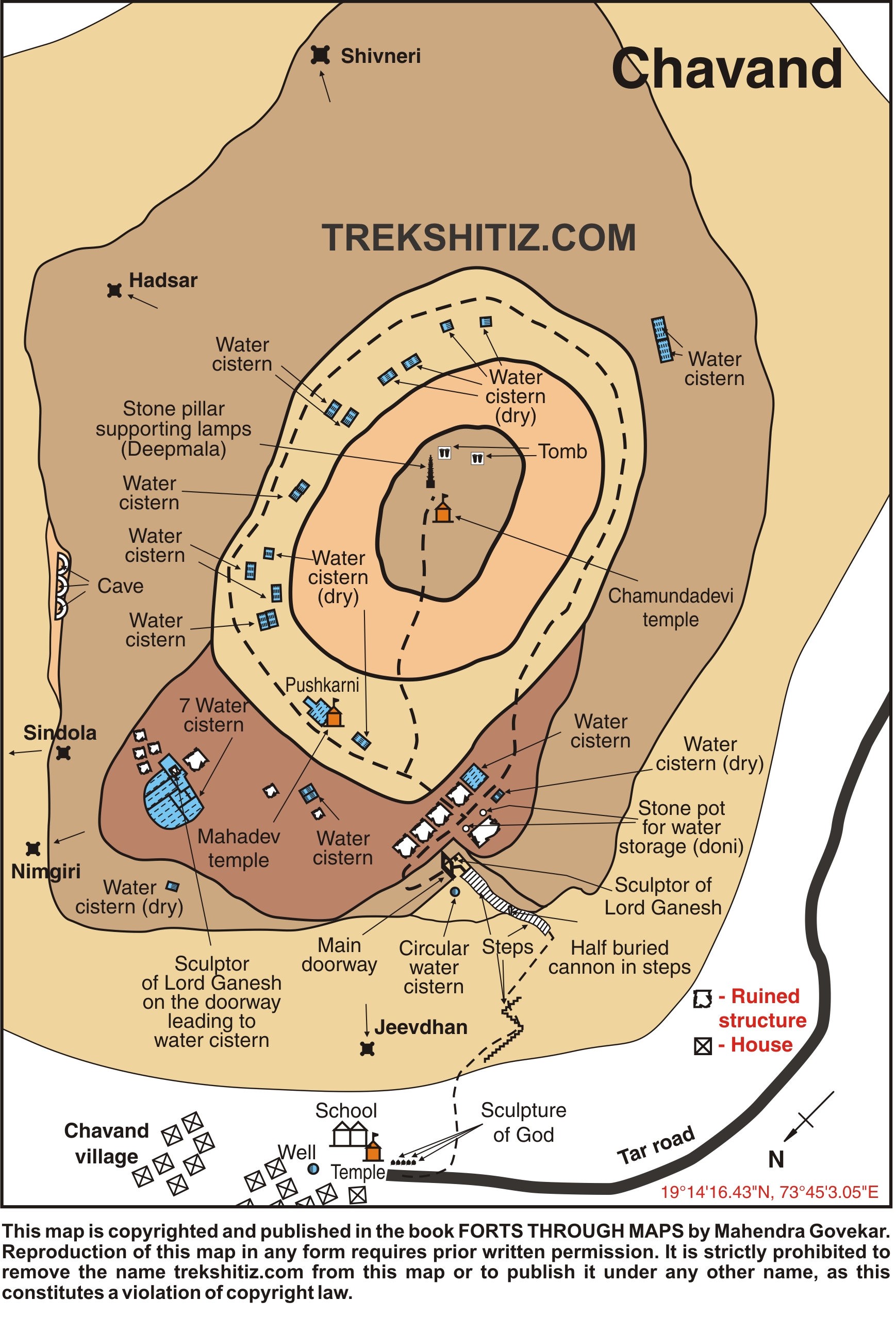
Introduction
Sahyadri is not just a mountain range, but it is a great treasure of history, the history of the struggle by the great Marathas, & ancient Satvaahans, who left for us with their fine arts with which very few modern carvings can be compared. The Satvaahans ruled what is today called the state of Maharashtra, & their great regime is commemorated by the remnants of the forts & caves they constructed in the heart of the Sahyadris. The whole range that has been guarding the ancient commercial route of Naneghat for thousands of years includes the forts of Jeevdhan, Hadsar, and Mahishgad & Chavand. These belong to the Satvaahan era. And Chavand being one of them is a very significant one.
Situated at a height of 3000ft from sea level, the fort houses many a remnant of constructions that take us about 800 years back into the time. The fort is in Pune district, at a distance of 20 km from the city of Junnar. The region at the foothills of the fort contains exotic flora & fauna. It was here that we could spot at least 12 varieties of birds. Village of Chavandwadi lies at the base of the fort.
Historical Background
Medieval period
Malik Ahmed founded the Nizam Dynasty in 1485. He was the first Nizamshah who acquired the fort of Chavand after the dissolution of the Bahmani Empire.
The seventh Nizamshah was Second Burhanshah. His grandson Bahadurshah was imprisoned here in 1594. Bahadurshah was the nephew of Chandbibi, a renowned personality from the same period. She played an important role in helping him to achieve the throne.
In 1636 Shahajiraje, father of Shivaji Maharaj, signed a treaty with the Moghals, in which the Moghals got Chavand.
Shivaji Maharaj named the fort as “Prasannagad”.
Mythological references
1) The forts named after the names of great sages (for e.g. Vasota, named after Vasistha) are pre-ancient forts.
2) The forts decorated by Buddhist carvings and sculptures (for e.g. Shivneri) are ancient forts.
3) Forts belonging to the medieval period are related to Shaiva, Shakta or Naath.
4) The goddess Chamunda is an idol of destruction of evil, with a terrifying appearance, armed with weapons. The deity belongs to Bengal, Bihar and Karnataka.
How to Reach
The way to the top of the fort goes along the village school, from the western side of the fort. From here, it takes about 45 minutes to reach the entrance door. From here the footsteps take us to the plains, on which we can see the remnants of many constructions.
Trek Duration
⏱️ 45 minutes
Facilities & Amenities
Accommodation
One can stay on the fort in the caves, but mice may pose a problem. Trekkers also stay in the village school. There is boarding facility in Kukdeshwar temple too.
Food
Available in base village.
Water
There are many a cisterns and tanks on the fort, but the two on the southwest side are more reliable.
Best Season to Visit
🌤️ N/A
Nearby Villages
Chavand
Other Forts in Naneghat
Planning Your Trek?
Pack Smart
Carry essentials, water, and first aid kit
Start Early
Begin your trek early in the morning
Trek in Groups
Always trek with companions for safety
Keep Forts Clean
Do not litter on forts. Do not damage the fort.