Lohgad
Introduction
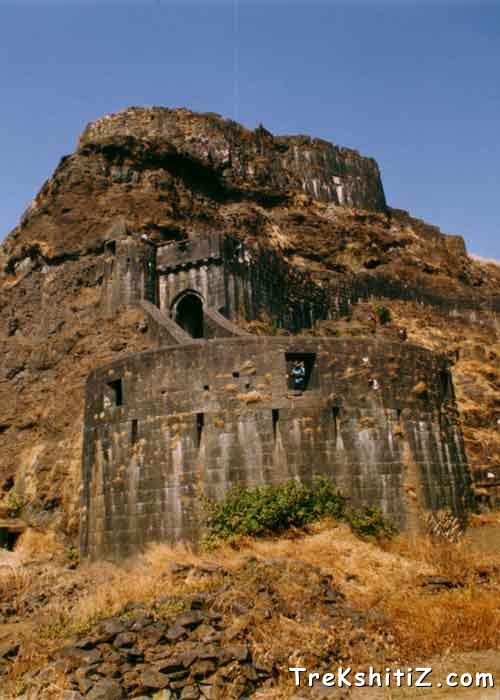
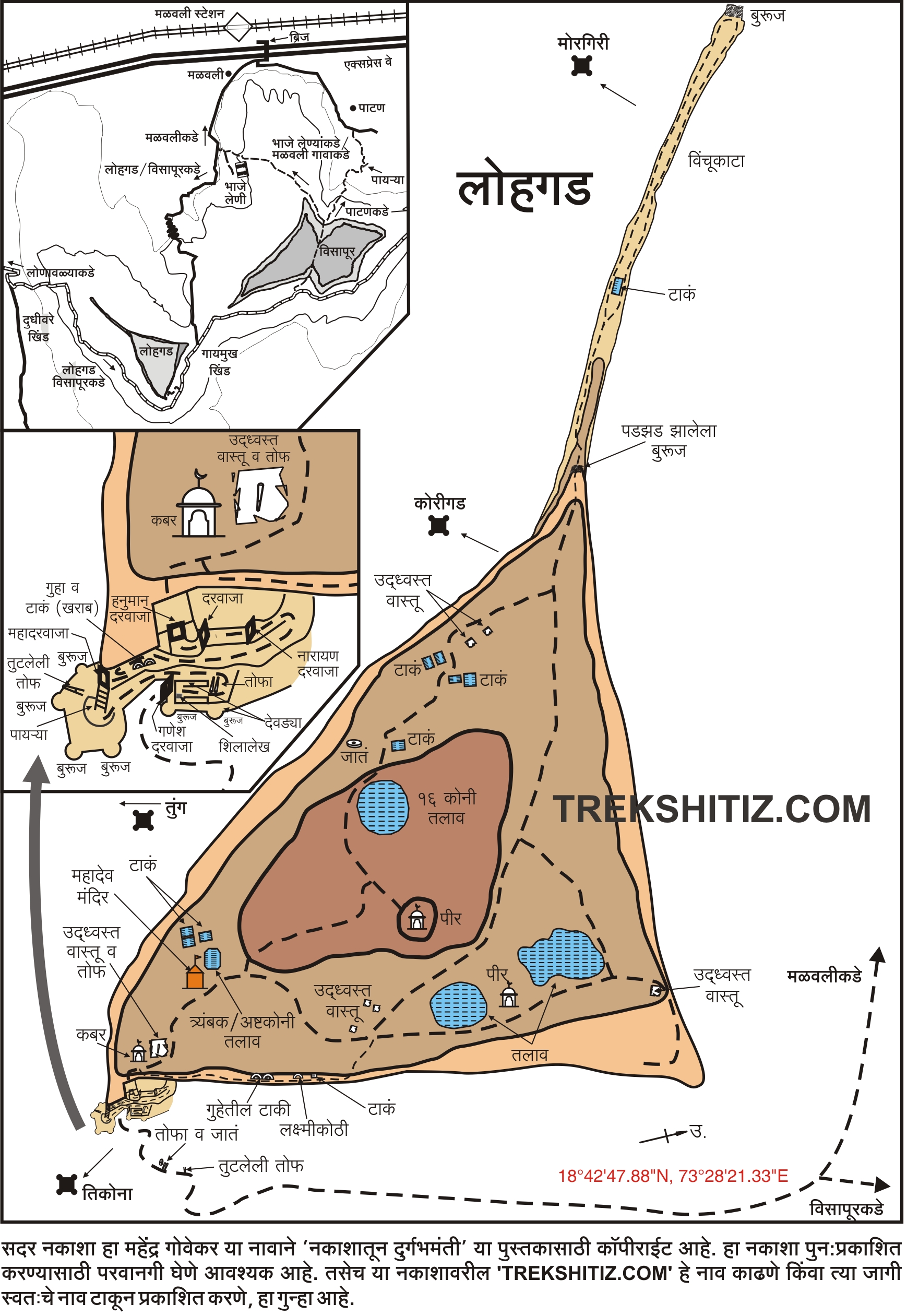
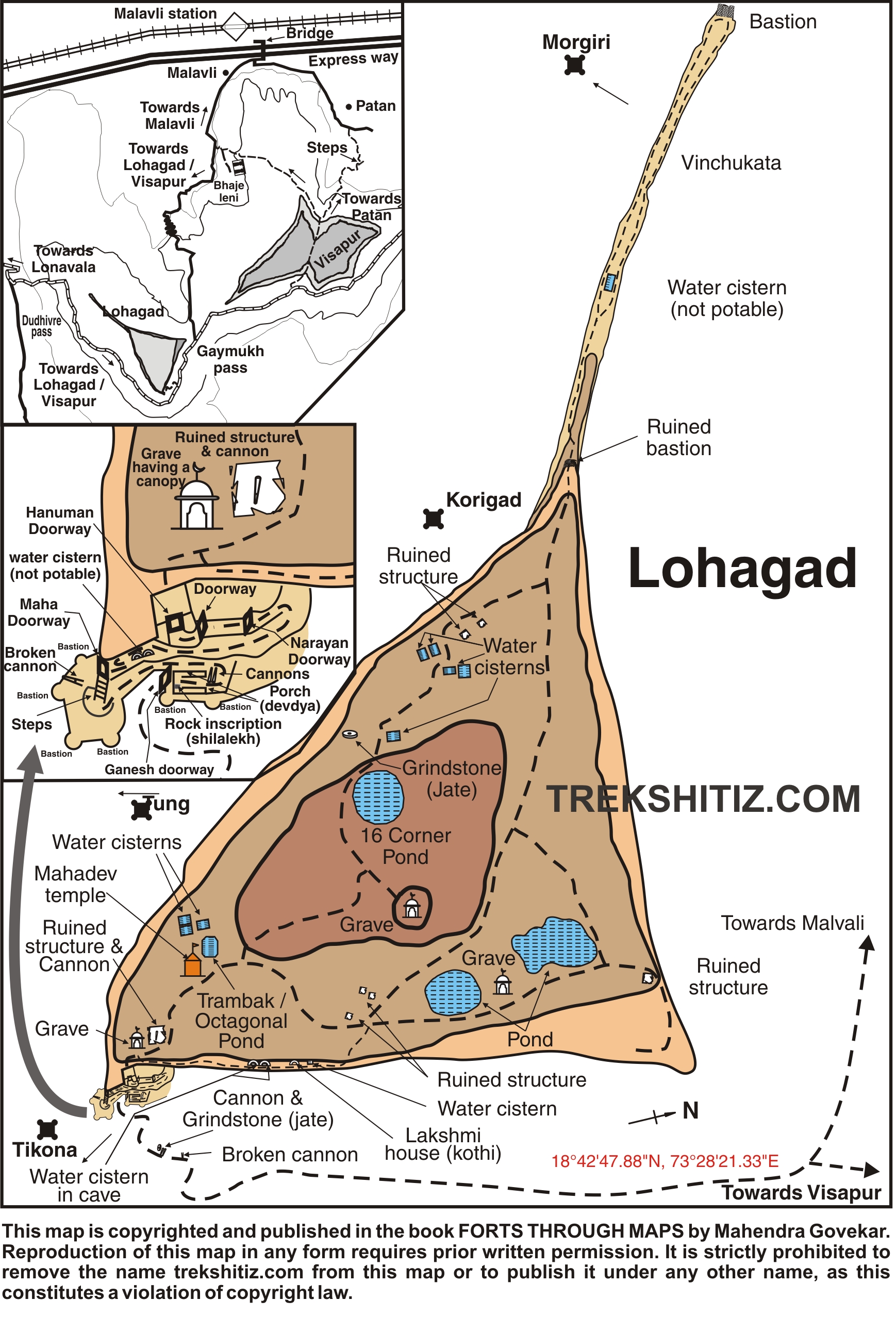
Each and every fort built had a purpose mainly confined to war times, but the basic aim behind fort building was to guard the important routes on which trade takes place. Each and every fort is built to protect the 60 ghats in Sahyadri. Those, which belong to ancient times, include Shivneri, Rajgad, Lohgad and many others. Of them, Lohgad and Visapur, two forts are situated near Lonavala, a famous place near Pune. Lohgad is 2000 years old, and this is proved by the existence of Bhaje and Karla caves in its vicinity. The Buddhist followers who traveled all over to spread Buddhism carved these out. These were the places where they could get peace of mind, far from people, on high mountains. Thus the forts played a major role in preserving a great culture.
Historical Background
Lohgad was one of the most important forts of Satwaahan Period, which takes us to 2000 to 2500 years back. Bhaje & Bedse caves where used by Buddhist monks to stay. These caves are situated in the mountain of Visapur. Sage Lomesh had been meditating on Lohgad, and this is why the fort is called so. It had been built with a primary intention to keep a watch on Nane Maval, Korbaarse Maval and Andhra Maval.
After the downfall of Bahmani kingdom, the fort went into the hands of Nizamshahi in 1489. Thereafter it remained with till 1630. When the brother of seventh Nizam named second Burhan ruled here (1590-1594), he was imprisoned on this fort. In 1630, the fort went under the control of Adilshah. Shivaji Maharaj captured it in 1648, two years after he captured Torna. Netaji Palkar was appointed to look after the fort and the surrounding region.
In 1665, Mirza raja Jaysingh invaded Purandar, and launched a major attack on the forts in Pune region. Villages nearby Lohgad became a victim of that. In March 1665, Kutubuddin attacked and looted the villages here. About 1500 soldiers came down from the fort, but could not sustain, and returned back. According to the treaty of Purandar, the fort went into the hands of Aurangzeb. Aurangzeb broke the treaty, and Shivaji Maharaj got it back in 1670. Aurangzeb recaptured it in 1700. Shahu Maharaj gave the fort to Kanhoji Angre. In 1720 it was under the control of Balaji Vishwanath. Nana Phadnis was an important personality amongst the Peshwas. He developed the fort a lot. He renovated the first, second and the fourth entrance of the fort. Jaavji Bomble and later Dhondopant Nitsure ruled under Nana Phadnis. He shifted his entire treasury on this fort, which was kept in Laxmi Kothi. Nana Phadnis passed away in 1800. His wife came here in 1802. Bajirao-II was an inefficient ruler, who was pro-British. General Wellesley was the person who insisted Dhondopant to be loyal to Bajirao. But it did not last long, and Dhondopant Nitsure’s man attacked Bajirao. Wellesley decided to capture the fort. In 1818 colonel Prother came here and captured Visapur. Lohgad came into his hands without firing a single bullet.
Facilities & Amenities
Accommodation
In Laxmi Kothi nearly 50 persons can be accommodated.
Food
Food is available at Lohgaon and we can also carry our own food.
Water
Drinking water is present throughout the year.
Best Season to Visit
🌤️ N/A
Nearby Villages
Malavali,Lohgadwadi
Other Forts in Lonavala
Planning Your Trek?
Pack Smart
Carry essentials, water, and first aid kit
Start Early
Begin your trek early in the morning
Trek in Groups
Always trek with companions for safety
Keep Forts Clean
Do not litter on forts. Do not damage the fort.