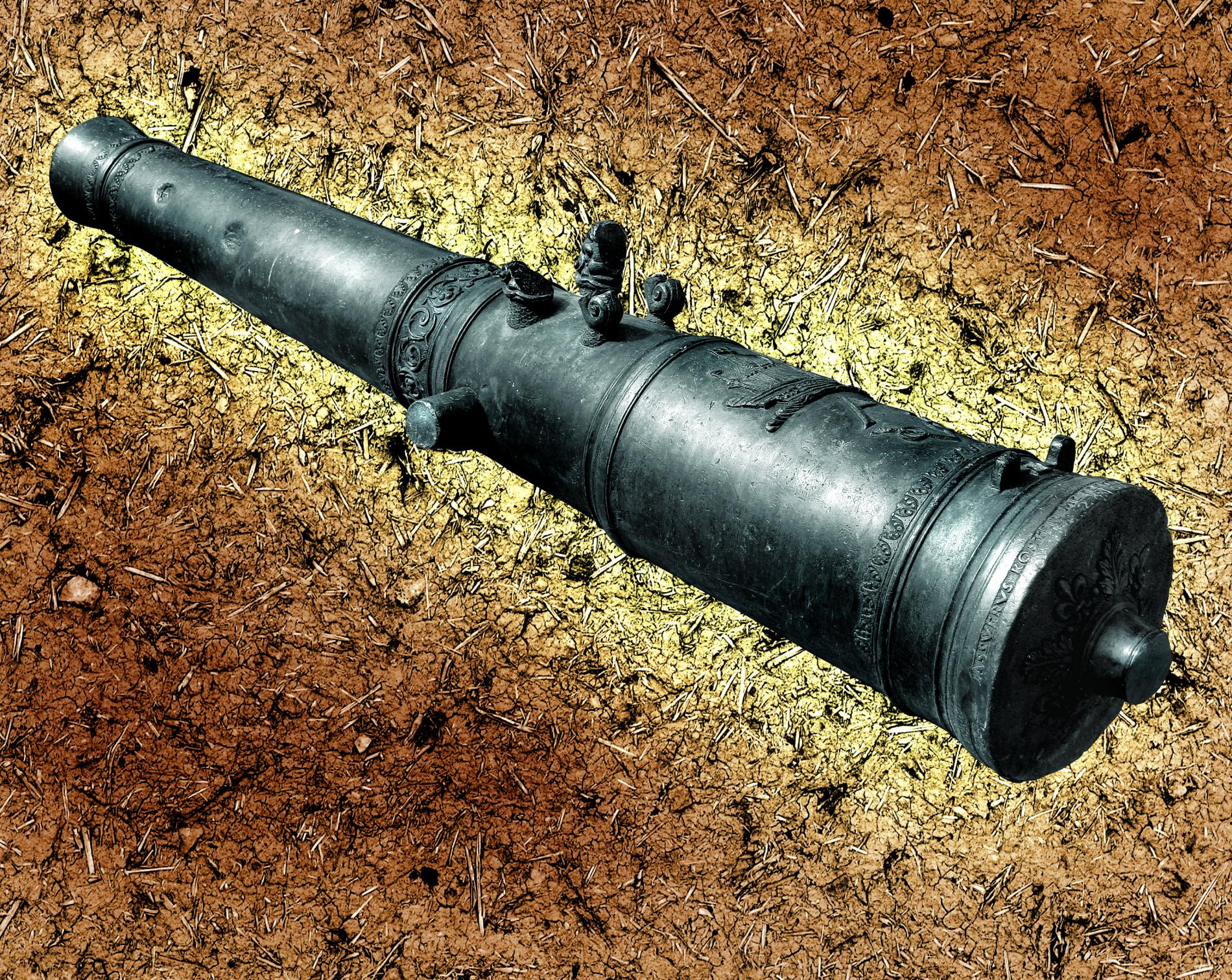
Introduction
Although there are differing opinions about who discovered gunpowder and when, knowledge of gunpowder existed in India from ancient times. According to the Italian traveller Tavernier, the technique of manufacturing gunpowder was known in Assam and spread to the rest of the world via Burma.
Historical Background
Western historians attribute the discovery of gunpowder to Roger Bacon in 1249. Later, Berthold Schwarz demonstrated its practical use around 1320. Cannon-casting technology spread from Christian regions to Muslim Spain and was adopted by the Turks. Sultan Mehmed II commissioned the massive cannon “Orban” and used artillery to destroy the walls of Constantinople in 1453. Babur used cannons in the First Battle of Panipat and against Rana Sanga at Khanwa. Marathas later used European cannons in the Third Battle of Panipat.
Technology
Cast cannon technology, breach-loading cannons, explosive shells
Materials Used:
Bronze, Cast Iron, Iron
Bronze, Cast Iron, Iron
Weight:
Up to 1000 pounds (cannonball)
Up to 1000 pounds (cannonball)
Range / Capacity:
Up to 1 mile (early large cannons)
Up to 1 mile (early large cannons)
Firing Mechanism:
Gunpowder ignition and later breach-loading mechanisms
Gunpowder ignition and later breach-loading mechanisms
Usage in India
Cannons were used extensively by Babur in India and later by Marathas with European artillery support.
Related Battles
Siege of Constantinople (1453), First Battle of Panipat (1526), Battle of Khanwa (1527), Third Battle of Panipat (1761)
Advantages
Extremely effective in sieges; capable of destroying fortified walls and enemy formations
Limitations
Heavy, difficult to transport, slow reload in early versions
Notes
Advancements like shrapnel shells (1784) and breach-loading cannons (1851) revolutionized artillery warfare.