Introduction
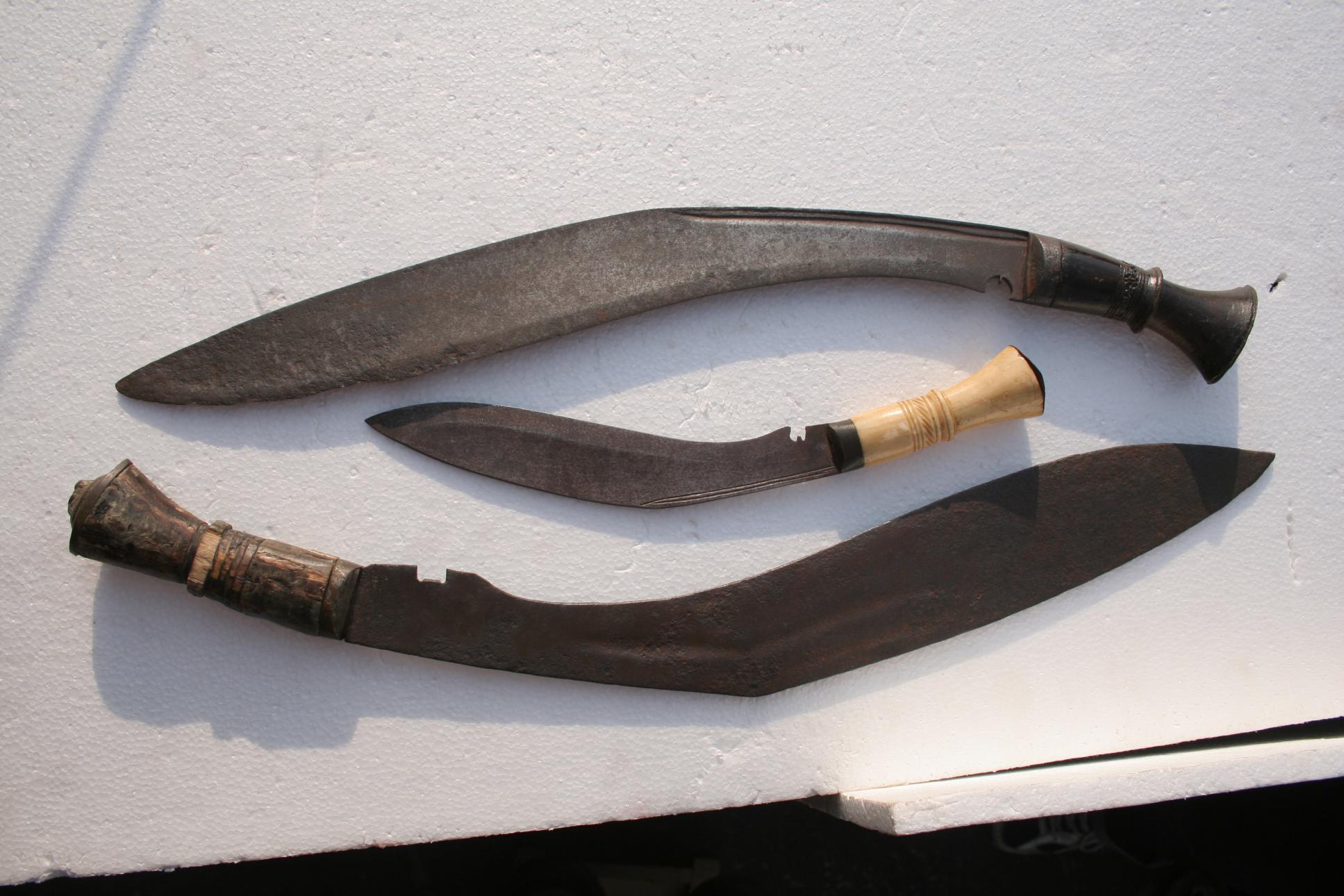
Kukri is a traditional Nepalese weapon with a distinctive inward-curved blade. Its length generally ranges from 6 inches to 24 inches.
Historical Background
The Kukri has a unique blade design where the edge lies on the inner curve. The blade is narrow near the hilt, bends inward at a specific angle, then widens before tapering sharply at the tip. A sacred trident-shaped notch is present on the inner edge. Though a weapon of war, the Kukri has also been widely used for domestic purposes in Nepal. It gained international recognition due to its extensive use by Gurkha soldiers in the Indian Army and during the First and Second World Wars.
Technology
Forged inward-curved blade weapon
Materials Used:
Iron, Steel, Wood, Horn, Plastic, Aluminium
Iron, Steel, Wood, Horn, Plastic, Aluminium
Range / Capacity:
Close to medium range
Close to medium range
Usage in India
Symbol of Gurkha regiments in the Indian Army; widely used by Gurkha soldiers
Related Battles
First World War, Second World War
Advantages
Highly effective chopping power, versatile for combat and utility, strong cultural and military identity
Limitations
Requires skill due to curved blade; limited reach compared to swords
Notes
Two main types exist: “Sirupate” used for warfare and “Budhune” used for daily household tasks. The sheath is traditionally made from soft wood.