Introduction
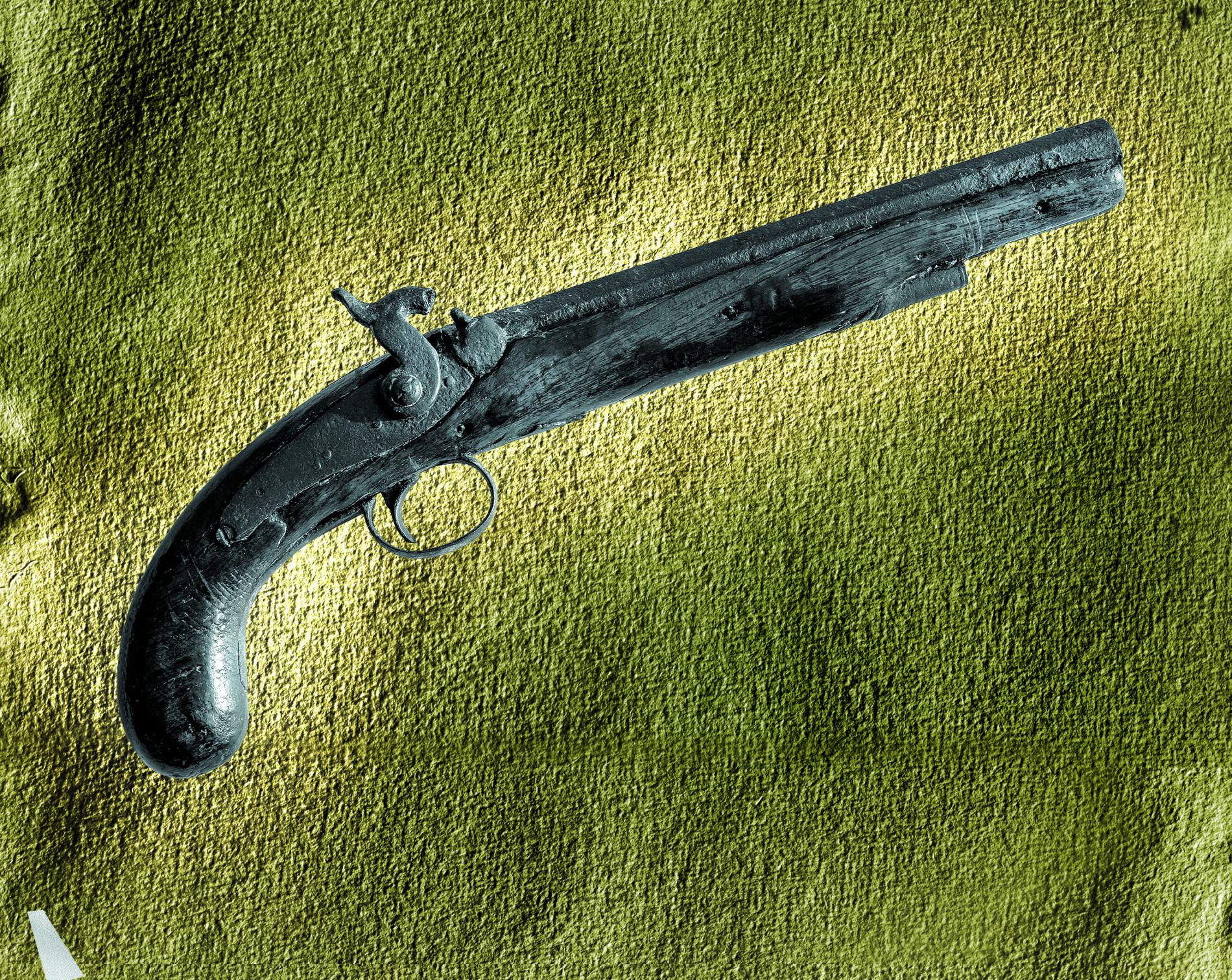
With the discovery of gunpowder, handheld firearms were successfully developed. The earliest recorded use of firearms dates back to 1324 during the siege of Metz.
Historical Background
Early pistols weighed around 10 pounds and required the soldier to aim the weapon while simultaneously igniting the explosive material using a burning match. In the 15th century, the matchlock mechanism developed in Germany enabled better aiming. Spain later developed the musket, a 6-foot-long firearm weighing nearly 15 pounds. After 1635, flintlock firearms replaced matchlocks due to improved ignition reliability.
Technology
Matchlock, Flintlock, Percussion system
Materials Used:
Metal, Wood, Gunpowder
Metal, Wood, Gunpowder
Weight:
Approx. 10–15 pounds (early models)
Approx. 10–15 pounds (early models)
Range / Capacity:
Short to medium range
Short to medium range
Firing Mechanism:
Ignition using match cord, flint striking, or percussion cap
Ignition using match cord, flint striking, or percussion cap
Usage in India
Firearms entered India with Babur in the 16th century. Babur mentions the effectiveness of firearms during the Battle of Khanwa. Later, firearms played a decisive role in the Third Battle of Panipat in 1761.
Related Battles
Battle of Khanwa (1527), Third Battle of Panipat (1761)
Advantages
Higher accuracy with rifling, faster firing mechanisms, effective in all weather conditions (flintlock)
Limitations
Heavy weight, slow reload time, dependence on gunpowder quality
Notes
Greased cartridges later became the indirect cause of the 1857 uprising.